case study
How Strasser went from the worst configurator in the industry to the best.
Strategy
UI/UX Design
Web Development
Accessibility Audit
Web Expertise
Design
Product Configurator
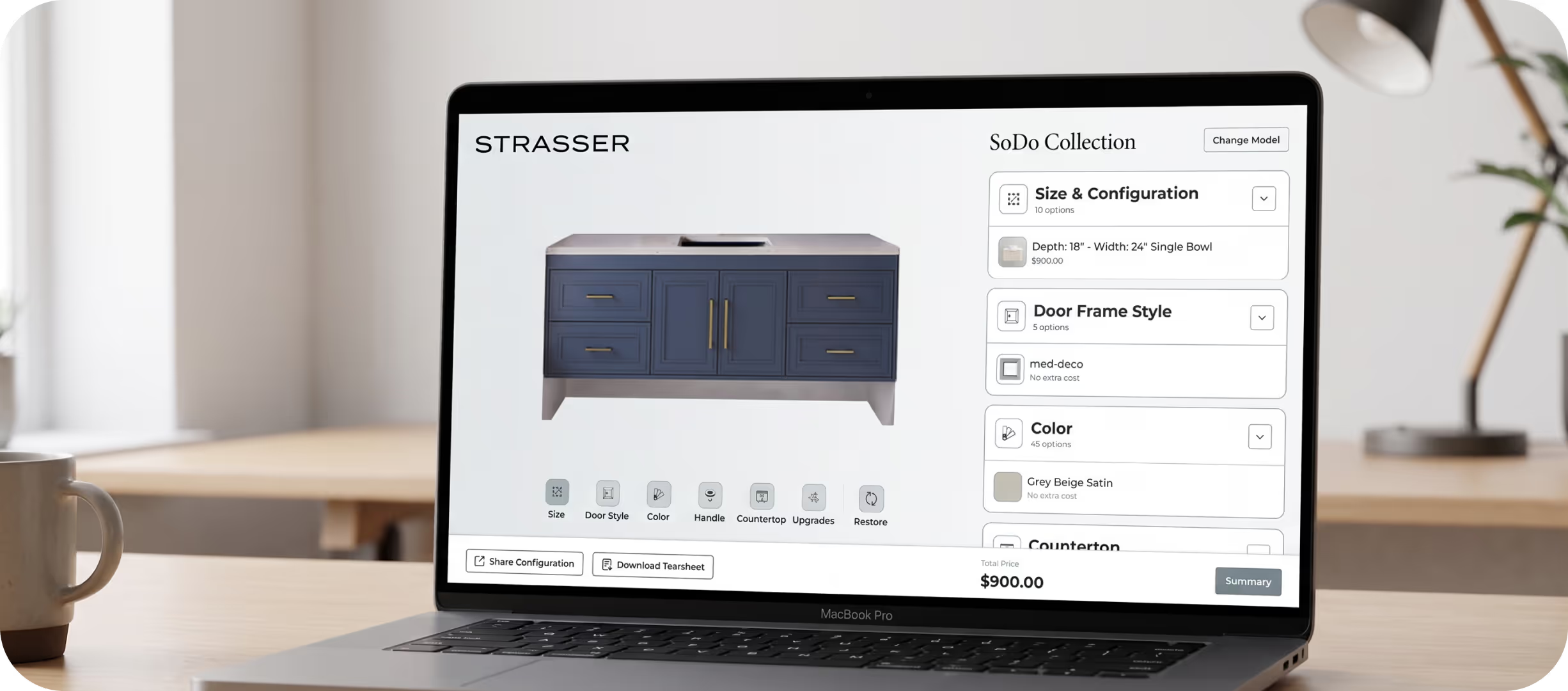
Strasser is a premium bathroom vanity manufacturer based in Woodinville, Washington, with more than 40 years of handcrafted furniture behind them. Every piece is made to order from US and Canadian hardwoods, sold through over 500 luxury showrooms nationwide.
Their previous configurator showed a flat, face-on 2D image of the cabinet. One hardware option. No countertops. No spec sheets. Just a static render, a color, and a price. For a brand with one of the deepest product ranges in the category, the old tool was actively working against them. Dealers had internalized its limitations as the boundaries of what Strasser offered.
We replaced it with a configurator built around Strasser’s full range and their real manufacturing rules. Dealers who had spent years on the old tool called it a completely different category of experience. Some of these dealers also carried Timberline, a sister brand we had already built a configurator for under The Scott Group. For those dealers, the shift from Strasser’s old tool to the new one was more pronounced than going from no configurator at all on the Timberline side.
William Scott at The Scott Group heard the question directly from dealers:

Dealers and their customers reacted as if the catalog had expanded, because for the first time they could actually see and explore everything Strasser had always been capable of.
The configurator also changed day-to-day operations: cleaner orders because the dependency rules are built into the interface, fewer returns because customers see exactly what they’re ordering before they commit, and branded PDF tear sheets that dealers had been asking for. Both configurators now run on a shared architecture, which means every improvement made for one brand benefits the other, and the next phase of work (connecting the configurator directly into dealer e-commerce sites) is already underway.
William was clear about what made the partnership work: there was genuine passion from the Kalon team to get the end-user experience right, and having a single point of contact in Austin throughout the project meant that when complexity surfaced (and it did), both sides could work through it together in real time.
Keep reading for the full story.

Strasser’s previous configurator did what a basic tool does. Select a configuration, pick a color, get a price. No countertops. No hardware variation. No way to generate a specification or a tear sheet for the customer sitting across the table.
For dealers, this meant relying on spec books and imagination. A homeowner in a showroom had to picture how a Powder Grey finish might look paired with walnut hardware on a Montlake vanity. And when people can’t see the options clearly, they default to what they already know. Much of the catalog went underexplored because the path to discovering it simply wasn’t there.
The tool that was supposed to help dealers sell was, in practice, narrowing their view of what Strasser could do.

“Strasser had built something really special over 40 years. The collections, the color program, the level of customization available. But their existing tool was only letting dealers scratch the surface. When we got into it, the opportunity was to build something that finally gave dealers and their customers a way to experience the full depth of what Strasser had always been capable of.”
CEO
KALON

By the time we started the Strasser build, we had already been working with William and The Scott Group on the Timberline configurator. That relationship mattered. The architecture was proven, but more importantly, both teams understood how the other worked. We knew what the Scott Group cared about, how they thought about their dealer network, and where their product complexity would push the build further than Timberline had. They knew how we worked through problems and what to expect from us when things got complicated.
Strasser was a more involved build from the start. More collections, more door styles, additional countertop and sink options, and a longer configuration flow for each piece. The volume of layered images grew quickly as a result.
“Strasser was a deeper build than Timberline. More products, more steps, more options at every stage of the flow. The volume of renders added up fast. But the underlying approach was the same: codify the manufacturing rules into the interface so that the dealer can explore freely without ever landing on an invalid combination. When someone is configuring a Strasser vanity, every choice they see is a choice the factory can actually produce.”
CHIEF OPERATING OFFICER
KALON

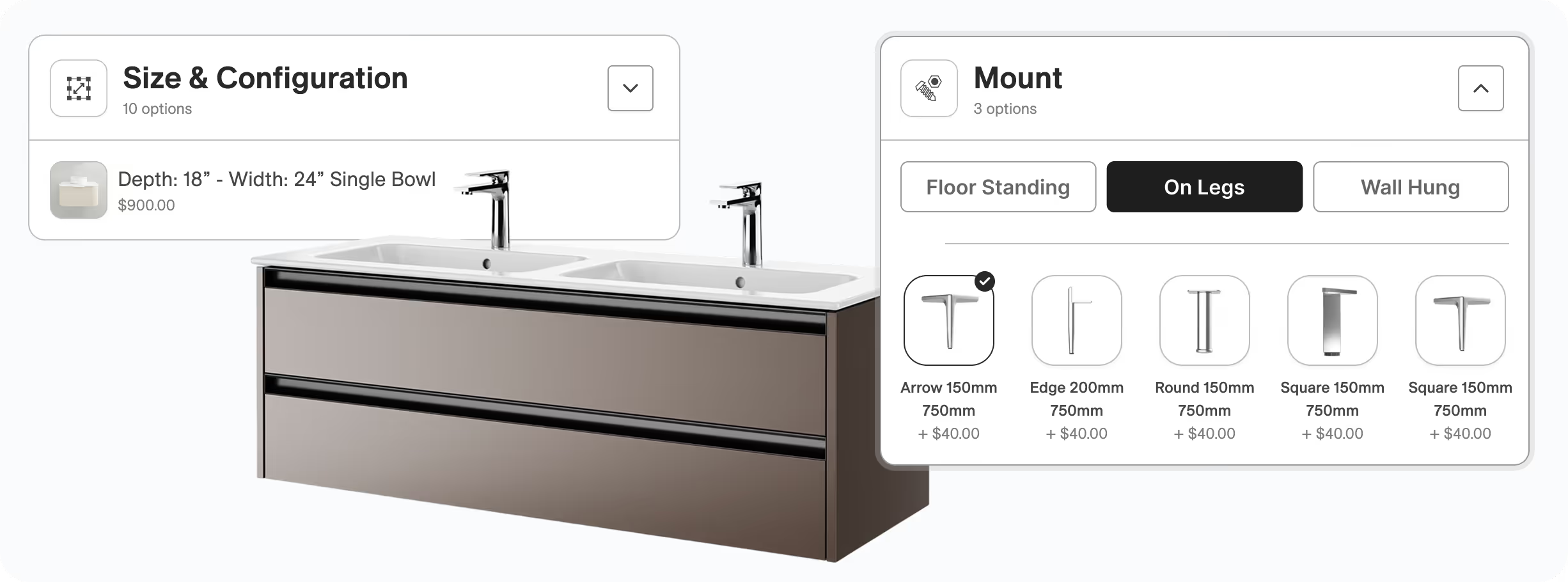
The configurator follows the same principle that guided the Timberline build: mirror the way someone naturally thinks about specifying a vanity. Each selection updates the image in real time. The flow is intuitive enough that dealers can open it and start building without instruction, but the dependency rules running underneath prevent them from ever configuring something the factory can't produce.
The most telling feedback came from dealers who carried both brands. Some of these dealers had experienced the Timberline configurator launch, which took them from having no tool at all to having one the industry recognized as the best available. You might expect that leap to be the more dramatic shift. It wasn't.
The dealers who moved from Strasser's old 2D tool to the new one reacted more strongly.
William Scott, who oversees both brands through The Scott Group, saw it firsthand:
General Manager
THE SCOTT GROUP

Dealers were asking: “How did you go from the worst in the industry to the best in the industry in one step?”
That reaction makes sense when you consider what was actually happening. The old tool had been shaping a limited perception of the brand for years. Dealers who used it every day had accepted its constraints as the boundaries of what Strasser offered. When those constraints disappeared and the full range became visible, dealers were surprised at how much had always been there.
The dealers who lived with Strasser's old configurator for years felt the difference most. When a tool that was actively limiting their view of the brand was replaced with one that showed them everything, the impact ran deeper than starting from scratch.
A project like this requires both sides to be fully invested. Strasser’s product range is deep and complex, and translating it faithfully into a configurator meant working through dependency rules, edge cases, and rendering decisions that couldn’t be anticipated in a brief. That’s the kind of work that depends on both teams being open with each other.
William was straightforward about what made this partnership hold together:
"There was definitely passion and interest from the Kalon team, wanting to make it work the best we can from an end-user point of view, and I think that paid off."
Austin served as the primary point of contact throughout, just as he had for the Timberline build. For a project with this many moving parts, that continuity mattered. A build this involved always has moments where plans need to adjust, and when those moments came, there was never ambiguity about who to call or whether it would be taken seriously.

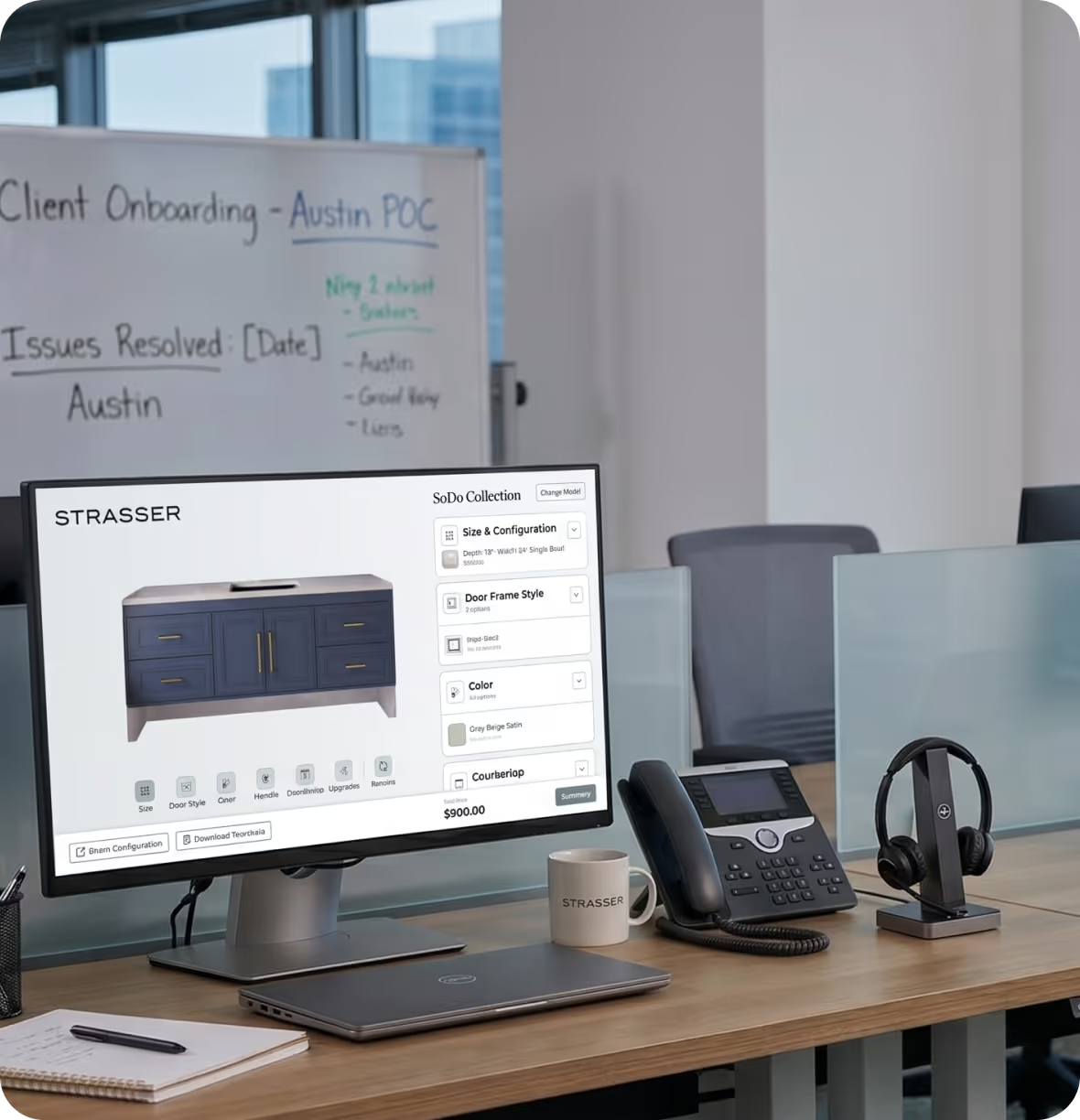
"Having one point of contact for most of the way through was great. Austin was great on the back end. If anything wasn't going according to plan, he was always available to talk to."
That accessibility is what allowed both teams to work through complexity as it surfaced rather than letting it accumulate. The Strasser build was bigger than Timberline in every dimension, and some of what needed hardcoding only became apparent mid-project. A working relationship where issues could be raised and resolved in real time was the difference between those moments slowing the project down and both teams working through them together.
We built the Timberline configurator first, deliberately. It was the simpler of the two: fewer products, fewer steps, a more contained option set. That project proved the architecture and refined the approach. Strasser was always going to be the bigger ask.
The difference showed up in every dimension. More collections, more door styles within each, a wider range of countertops and sinks, and more hardware options. Each additional variable multiplied the total number of possible combinations. The render volume climbed quickly, and certain product configurations required hardcoding that the Timberline project hadn’t demanded.
None of that complexity is visible to the dealer. A showroom salesperson opening the Strasser configurator on a tablet sees a clean, fast interface that responds instantly to every selection. The engineering that makes this possible is the same smart layering approach that powers the Timberline tool, scaled to accommodate a significantly larger product range.
When the configurator launched, Strasser hadn’t introduced a single new product. No new collections, no new colors, no new hardware. But dealers responded as if the catalog had expanded substantially. William noted this was even more pronounced on the Strasser side than it had been at Timberline, because there were simply more options that had been invisible under the old tool.
The shared architecture behind both configurators brings the same operational benefits to Strasser that proved their value at Timberline: cleaner orders because dependency rules are built into the interface, fewer returns because customers see exactly what they’re ordering before they commit, and the ability for dealers to generate branded PDF tear sheets that bridge the digital experience with the physical showroom.
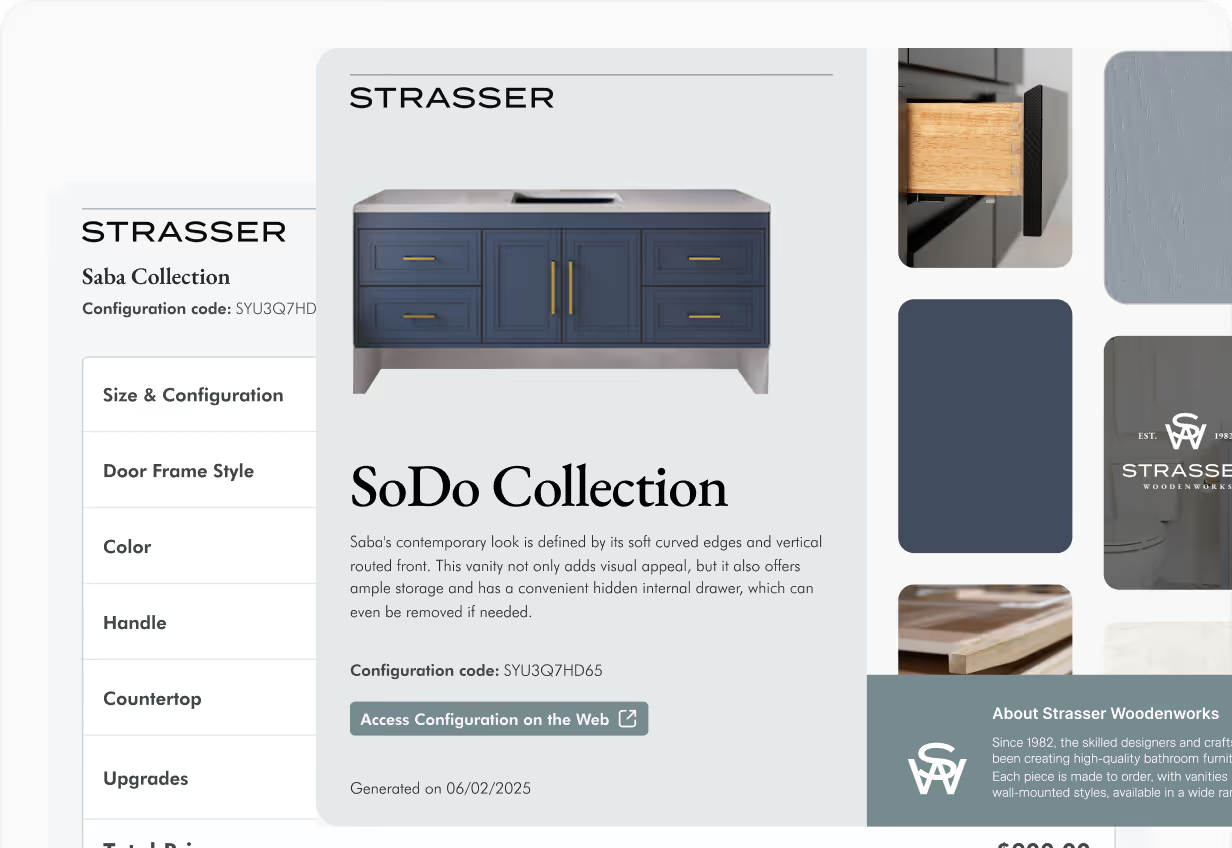
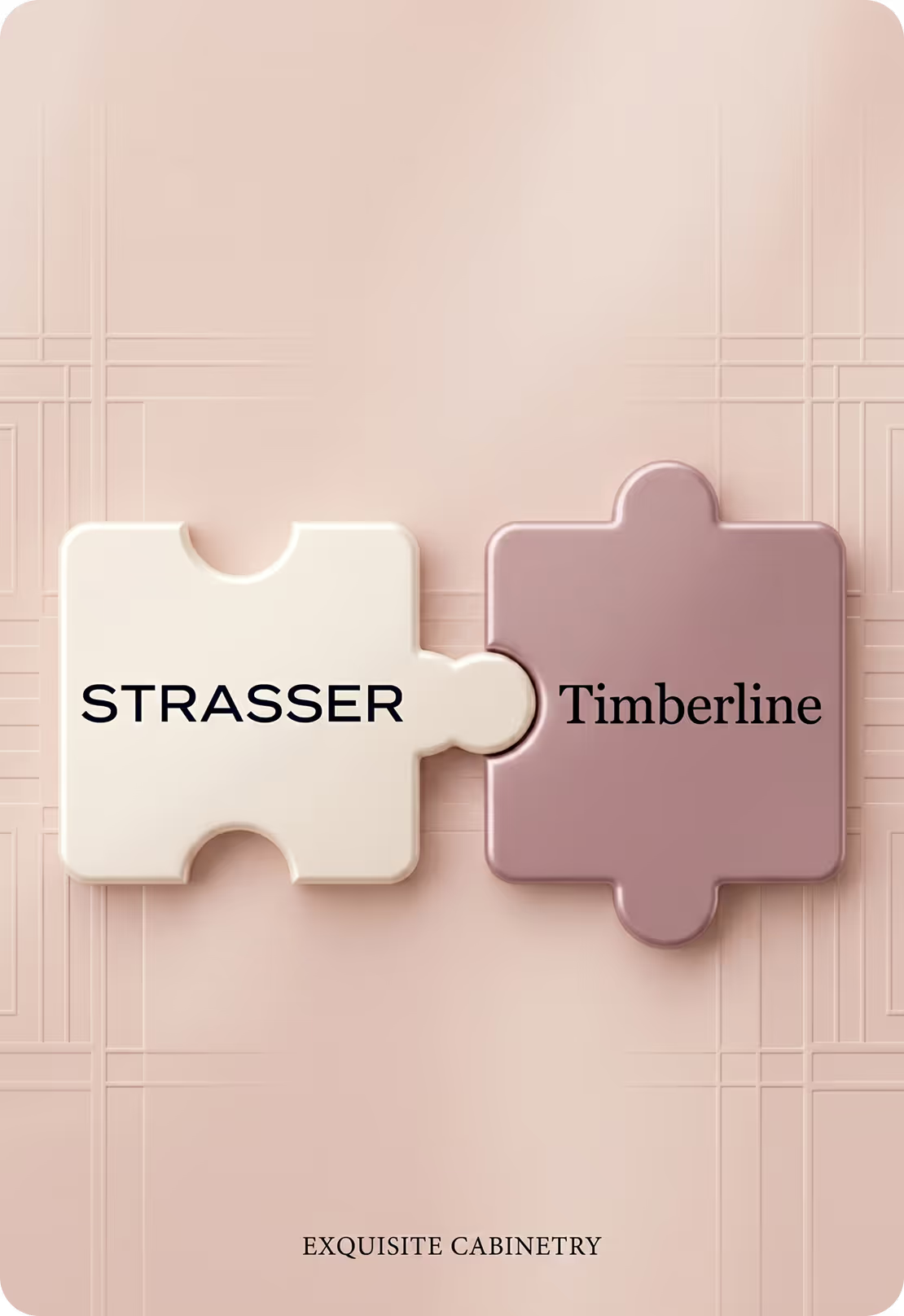
One of the less obvious advantages of this project is what it means for The Scott Group as a whole. Timberline and Strasser are distinct brands with different market positions, different product lines, and different dealer networks. But they now share a configurator architecture that has been tested and refined across both.
That shared foundation means new features developed for one brand benefit the other. It also means that when either brand evolves its product line, the configurator can accommodate those changes without a fundamental rebuild. The system was designed to grow alongside the business, and having two brands on the same architecture compounds that growth for both.
The configurator has started to shape how both Strasser and Timberline think about product development. New collections are now conceived with the configurator in mind from the start: how options will interact, how they'll render, how they'll fit within the existing logic structure. The tool changed how they sell. It's beginning to change what they design.
The next phase connects the configurator into dealer e-commerce sites, so that a customer who has built their ideal vanity on screen can move directly through to ordering it. For a made-to-order product with this many options, that's involved backend work. But it means the experience a customer has while configuring carries all the way through to checkout. Beyond that, the roadmap includes allowing customers to build out a full wall of connected cabinets, moving from individual vanity specification to complete bathroom planning.
What started as a single configurator build for Timberline has grown into an ongoing relationship across two brands, with both teams continuing to build on what’s already working. That’s how we prefer it.
William puts it plainly: