case study
Timberline has the range.
Now customers can finally see it.
Strategy
UI/UX Design
Web Development
Product Configurator

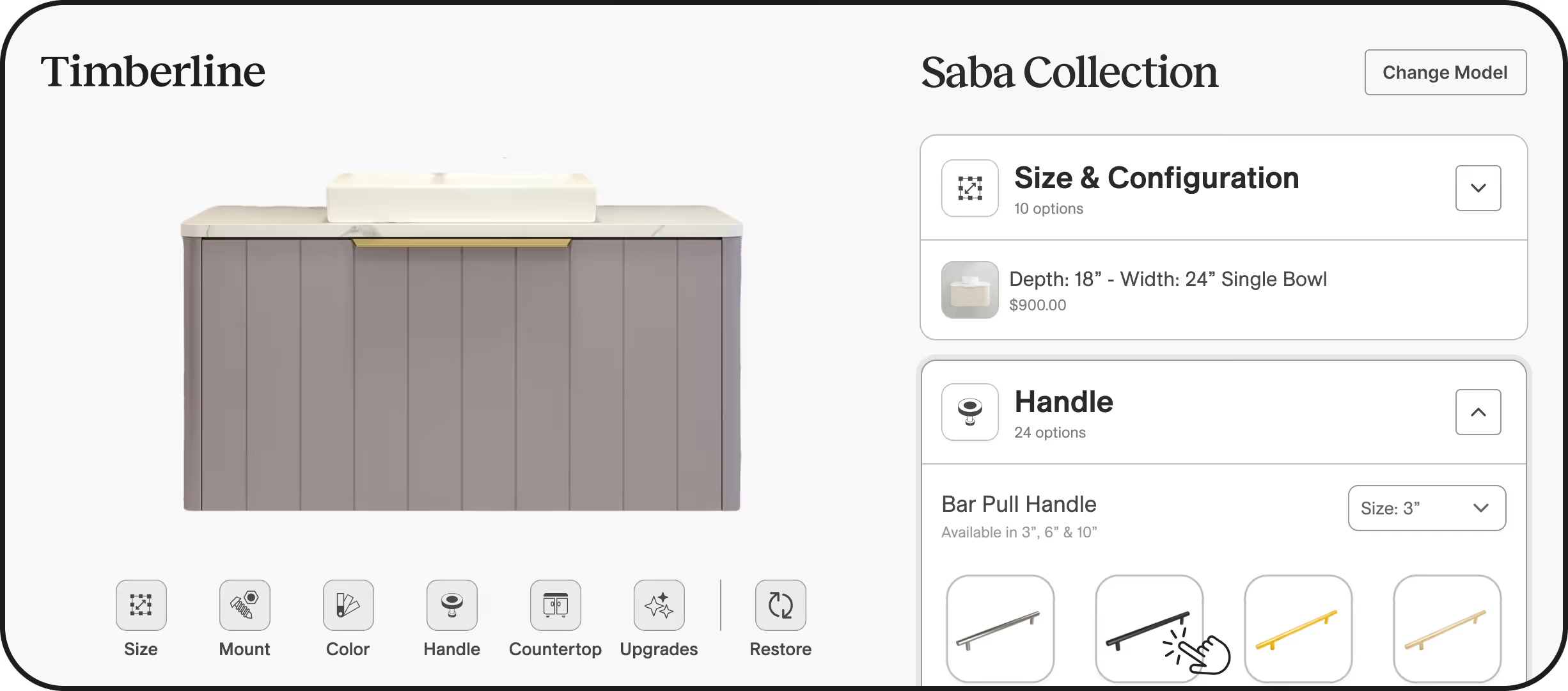
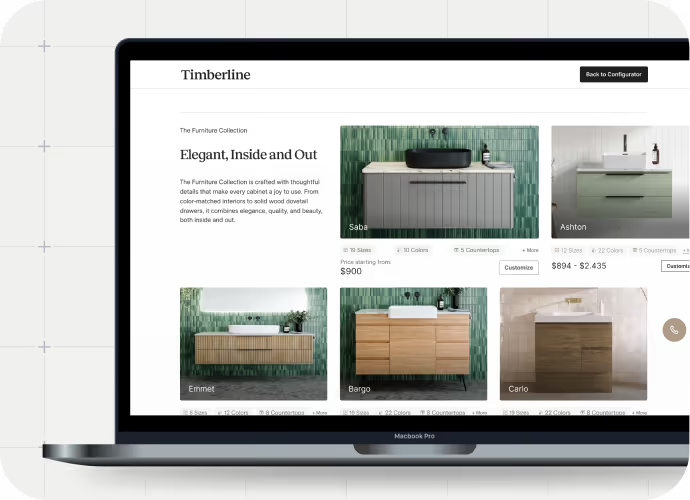
We transformed Timberline’s complex product catalog into an intuitive, interactive configurator that lets users explore every option with ease. With six of their top pages now dedicated to the configurator, the result is clear: fewer quotes, higher revenue, and scalable growth—without increasing headcount.
CEO
TIMBERLINE

Timberline’s catalog holds thousands of vanity combinations — every size, finish, door style, and hardware a customer could want. The configurator makes every one of them visible, and puts the full range in the hands of dealers and their customers.
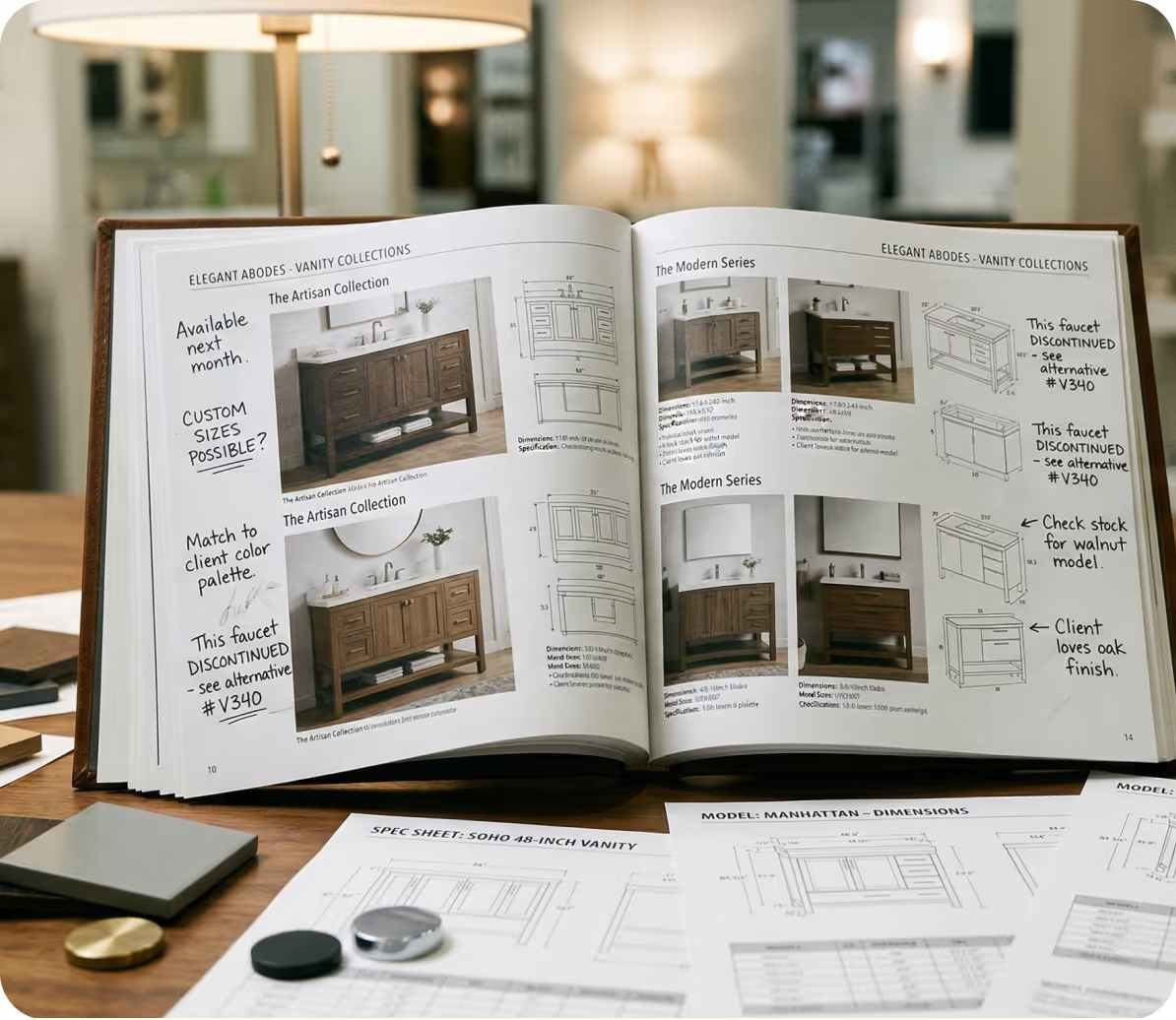
Dealers flip through catalogs, codes, and samples while homeowners try to imagine the end result. Even experts can miss what’s possible—and clear visions quickly blur into “this will do.”
This manual process created several challenges:

Dealers flip through catalogs, codes, and samples
Homeowners struggle to visualize the final result
Even experts can miss possible combinations
Clear ideas fade into uncertainty
“I want this” becomes “this will do”

It’s practically an industry standard now. Timberline’s founder and GM, William Scott, summed up the situation perfectly when he showed the finished tool to his wife right before it launched.
She doesn’t work in the industry, so she just looked at him and asked,
“Wait, you guys didn’t already have one of these?”

Every engagement starts with the same question: What does winning actually look like for you? We worked closely with Timberline’s stakeholders to define that answer early, then built toward it deliberately. Same people. More output. Better margins. Those weren’t aspirations — they were the brief.

Order volume grew without requiring new hires — the team scaled capacity without adding headcount.
Fewer manual quotes, more orders processed; dealers embraced the configurator as the new standard.

Fewer returns due to incompatible selections; customers order with certainty because they've already seen exactly what they're getting.
Before we designed anything, we spent time understanding how dealers actually sell. Not how the process was supposed to work — how it worked in practice. That research shaped every decision we made.

A dealer would walk a customer through a thick catalogue of item numbers, swatches, and spec sheets — holding the whole picture in their head while the customer tried to build one in theirs. The process relied entirely on the dealer’s product knowledge and the customer’s imagination. Both had limits. We mapped that flow end to end: where decisions stalled, where combinations got lost, and where customers disengaged. The friction wasn’t in the product. It was in the presentation.
Every configuration challenge we identified became a design constraint. Dealers needed to guide without overwhelming — so the configurator mirrors the natural sequence of a sales conversation: size first, then color, then hardware. Incompatible options disappear rather than throw errors. Each selection updates the product image in real time, so the customer is always looking at what they’re actually building. The tool doesn’t replace the dealer. It gives them something to sell with.

The quoting process has changed. Before, every custom inquiry meant a manual quote. Now people configure what they want, see what it looks like, and move forward. Timberline is a growing business in its own right, and the configurator is one part of that picture. But as order volume has climbed, the business hasn’t needed to grow the team to keep up. The configurator gave Timberline room to scale on its own terms.
Fewer items are returned, too. In the old process, someone might pick a handle that technically fits a drawer front but looks somehow wrong at full scale. The only way to find out was when the finished product arrived. Now, the configurator filters out incompatible options, so the final order matches the customer’s vision.
And the most unexpected shift: when Timberline develops new collections, they’re thinking in terms of how each option will work within the configurator from the very start. It changed how they sell. Now it’s starting to shape what they design.

The quoting process has changed. Before, every custom inquiry meant a manual quote. Now people configure what they want, see what it looks like, and move forward. Timberline is a growing business in its own right, and the configurator is one part of that picture. But as order volume has climbed, the business hasn’t needed to grow the team to keep up. The configurator gave Timberline room to scale on its own terms.
The next phase translates the configurator into dealer e-commerce sites, so that a customer who has built their perfect vanity on-screen can move straight through to ordering it. For a modern, direct-to-consumer product with this many options, that’s complex backend work. But it means the experience a customer has while configuring carries all the way through to checkout.
Beyond that, we’re expanding the configurator so customers can move from configuring a single piece to designing a wall of connected cabinets.
The same architecture is already extending further. Timberline’s parent company asked us to roll it out to Strasser, another brand in the family. Strasser had an older configurator that wasn’t serving them well, and the reaction from their dealers was just as strong.


Austin, our COO was Timberline’s single point of contact throughout the project, and when challenges came up, their sales worked through them together. That’s how we prefer it. Building something this considered takes a real partnership, and Timberline brought as much to the table as we did. William puts it best.